
While the economy will wait for a rate cut in December, the banking industry should be happy with the wave of liberalisation -- a big push for growth in bank credit, points out Tamal Bandyopadhyay.

"The new structure will substantially reduce taxes on the middle class and leave more money in their hands, boosting household consumption, savings and investment," Sitharaman said presenting what was dubbed as 'reformist' budget for the next fiscal in Lok Sabha.

'There is responsibility to make great games that are played by audiences, that fill the gap from an entertainment perspective.'

'We have now drastically simplified it, primarily to two rates in long-term capital gains: 20% and the applicable rates. Similarly, in short-term capital gains.' 'For listed shares, there is a slight increase, but for unlisted shares, where indexation benefits are removed, there is a reduction in rates, benefiting unlisted companies, venture capital firms, etc.' 'Similarly, in real estate, wherever returns are higher, the new structure is beneficial. In very few cases, returns are lower, and those are more of an exception.'

The 31st meeting of the Goods and Services Tax (GST) Council, held in December 2018, deferred a decision to reduce the GST rate for cement from 28 per cent to 18 per cent. This was despite recognising that cement - along with automobile parts - remained among the few mass-consumption items still taxed at the highest slab, which was originally meant for luxury and sin goods.

Andhra Pradesh will establish two expansive integrated space cities in Lepakshi and Tirupati, spanning around 33,000 acres.

CPGRAMS -- an online platform available to citizens 24x7 to lodge their grievances to public authorities on service delivery -- has existed for close to two decades. But it has never been this active, points out Tamal Bandyopadhyay.

If he cannot do it this term by using his bureaucracy and experts from different fields, it will be a tragedy, asserts Ramesh Menon.
The revised guidelines are aimed at curbing discretionary practices by field officers, especially the tendency to seek documents not mandated under the law.

'I do believe there will be a resolution in the next couple of months on the penal tariff and hopefully on the reciprocal tariff also.'

'A balanced portfolio mix of domestic and international equity, fixed income, and precious metals is recommended.'

Taking both direct and indirect taxes, the gross collection is expected to grow 10.45 per cent to Rs 33.61 trillion in 2023-2024.

'Reinvention is not a hugely difficult task. With technology as available today, you can reinvent yourself pretty quickly.'

'In diabetes remission, you go below a 6.5 HbA1c without medication.' 'And this happens only when you lose 10 to 15 per cent of your body weight with a good amount of lifestyle and dietary changes, exercise and sometimes medication.' 'You have to be able to sustain your HBA1C below 6.5 for at least a year without medication to say that the patient is in remission.'

The textile and apparel sector is India's second-largest employment provider, after agriculture, and it is now caught in a wave of uncertainty following the Donald Trump administration's tariff policy.

Ask rediffGURU Naveenn Kummar your insurance mutual fund and personal finance-related questions.

Talking to reporters in New Delhi, Angmo challenged authorities to an open debate on the allegations, including those suggesting links to Pakistan, and said neither she has been able to contact Wangchuk nor has she been provided with formal documents detailing the charges against him by the administration.

The more things change, the more they remain the same for corporate India. In the April-June 2025 period (Q1FY26) - for the ninth consecutive quarter - listed companies witnessed only single-digit revenue growth, while their core earnings, excluding other income and one-time gains, contracted for the second time in four quarters. This comes as firms brace for the impact of 50 per cent US tariff on Indian goods.

rediffGURU T S Khurana answers readers' personal income tax queries.

The GST Council on Saturday postponed a decision on cutting tax rate on life and health insurance premiums, officials said. The 55th meeting of the GST Council, chaired by Union Finance Minister Nirmala Sitharaman and comprising state counterparts, decided that some more technicalities needed to be ironed out and tasked the GoM for further deliberations.

Ask rediffGURU and PF expert Nitin Narkhede your mutual fund and personal finance-related questions.

Goods and Services Tax (GST) collections in September, in gross terms, were at Rs 1.73 lakh crore, with a yearly jump of 6.5 per cent, according to data from finance ministry released on Tuesday. In September 2023, the total collection was to the tune of Rs 1.62 lakh crore. CGST, SGST, IGST, and cess all increased year-on-year in September, official data made available on Tuesday showed.

'You've got to understand it is not easy to die by suicide.' 'People commit suicide only when they lose everything and find no other way to live.'

The news that Amazon India has launched diagnostic services in select metro cities in partnership with the unlisted Orange Health Labs has led to a look at the competitive intensity in healthcare services. Listed companies in the space such as Dr Lal Path Labs, Metropolis Health, Thyrocare, Vijaya, and Krsnaa have all seen double-digit stock price corrections over the last 6-9 months.
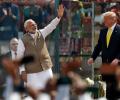
'It's important for India to think about areas where it wants the US to move.' 'We can be far more innovative in what we ask the US.' 'Given that there's a package deal, why not do it?'

'Rates go up, revenues go up, and the need for compensation diminishes.'
The GST Council on Saturday clarified that guarantees provided by corporate to their subsidiaries will attract an 18 per cent GST, while no tax will be levied if a personal guarantee is given by a director to the company. The council, chaired by Union Finance Minister Nirmala Sitharaman and comprising state ministers, also cut the GST rate on molasses to 5 per cent from 28 per cent. It also ceded the right to tax Extra Neutral Alcohol (raw product for making alcohol for human consumption) to the states.

The rising tide of Indian nationalism meant that the people of princely states now were keen to become a part of a united and integrated India rather than remain subjects of a princely state. The Congress too supported the people's wish and it fell upon Patel to get the princes to agree. He did so magnificently, using every trick available, whether it was sweet talk or coercion; the rulers buckled and Patel earned the eternal gratitude of the entire nation.
India's gross tax revenue, comprising both direct and indirect taxes between April and July, reported a growth rate of merely 2.8 per cent to Rs 8.9 trillion compared to the same period a year ago, as shown by government data on Thursday. This growth was dampened by direct tax figures, offsetting the healthy growth in goods and services tax collections and Customs duties. While net tax revenue contracted by 12.6 per cent to Rs 5.8 trillion up to July, accounting for 25 per cent of the Rs 23.3 trillion full-year target, this could be attributed to the increased tax devolution to states during the period.

At the stroke of midnight, live dashboards lit up simultaneously across Amazon India's World Trade Centre headquarters and Flipkart's Outer Ring Road office in Bengaluru. In sprawling "war rooms" at both the companies, executives monitored real-time data streams tracking payment speeds, inventory levels, and delivery logistics as millions of shoppers flooded online platforms.

'His campaign reached into every community, every constituency, with a unifying platform of affordability.' 'Zohran began by listening to Trump supporters and brought many of them to his side because they too care about affordability.' 'Care for the poor is a tenet of every faith; this is the best platform to unite us.'

As RBI governor, Sanjay Malhotra will have to give the highest priority to the interest of the economy while deciding on the growth-inflation trade off at Mint Street.
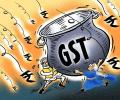
The gross GST collection rose 7.3 per cent year-on-year to Rs 1.77 lakh crore in December. The Central GST collection stood at Rs 32,836 crore, State GST at Rs 40,499 crore, Integrated IGST at Rs 47,783 crore and Cess at Rs 11,471 crore, according to government data released on Wednesday.

The highest-ever goods and services tax (GST) evasion has been done by the online money gaming industry.

The Trump trade shock is a chance to push long-overdue reforms, rather than tinker with tariffs to appease the US, suggests M Govinda Rao.

The recent ruling by the Authority of Advance Rulings making back-office services provided by a company to global firms taxable under GST, has sent shockwaves through the information technology and business process outsourcing industry.
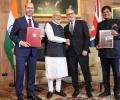
India and the UK on Thursday inked a landmark free trade agreement (FTA) that will cut tariffs on British whisky, cars and an array of items, besides boosting bilateral trade by around $34 billion annually.

Ask rediffGURU Naveenn Kummar your insurance mutual fund and personal finance-related questions.

India on Thursday signed a free trade agreement, officially dubbed as the Comprehensive Economic and Trade Agreement (CETA), with the UK - its 16th trade pact so far - as the country aims to boost bilateral trade and investments.

Bajaj Finance, IndusInd Bank, State Bank of India, Maruti, Tata Motors, ITC, Tata Steel and Reliance Industries were also among the gainers. Nestle, NTPC, Kotak Mahindra Bank, Power Grid and Titan were among the laggards.
